
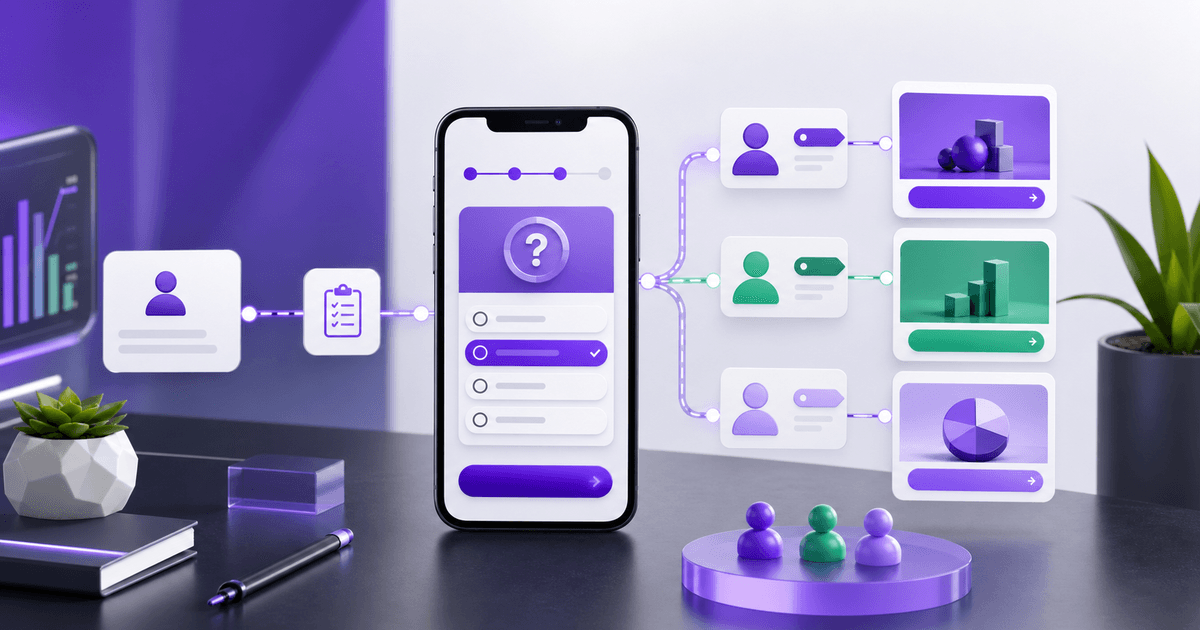
Not every lead should receive the same message. Two people can fill out the same form and be in completely different stages: one is comparing options, another needs to solve something urgently, and another is only researching.
A quiz helps reveal these differences before the first follow-up. Each answer creates context for segmentation, prioritization, and personalization.
What quiz segmentation means
Segmentation is not just creating neat groups in a report. It is using answers to make better decisions.
You can segment by:
- Main objective
- Current pain point
- Maturity level
- Urgency
- Company or operation size
- Approximate budget
- Interest in a specific solution
Ideally, each segment should receive a different next action. If everyone receives the same email, segmentation is not being used.
Questions that create useful segments
A good question separates paths. For example, "What is your biggest challenge right now?" can lead to different messages for acquisition, conversion, retention, or support.
Weak questions create curiosity but no decision. "Which color fits your brand?" may be fun, but it only matters if that answer changes the result or recommendation.
Before adding a question, ask: "What will I do differently with this information?"
Create clear result profiles
After the questions, turn answer combinations into profiles. Profiles help the visitor recognize themselves and help your team act.
Example profiles for a marketing quiz:
- "Needs to generate demand": traffic, top of funnel, and channels
- "Needs better qualification": segmentation and nurture
- "Needs more conversion": offer, proof, and CTA
- "Needs better measurement": analytics and experiments
Each profile should have a short explanation and a specific next step.
Personalize the final CTA
The CTA is where segmentation becomes conversion. If someone answered that they need to improve conversion, the button can point to a funnel diagnosis page. If they need demand generation, it can point to a campaign conversation.
Even when the final destination is the same, the button message can change:
- "See my funnel diagnosis"
- "Get a lead capture plan"
- "Discuss my campaign"
- "Access my profile recommendation"
Small changes in context increase relevance.
Use segments in sales follow-up
A lead that arrives with quiz answers enables a better conversation. Instead of opening with generic discovery questions, the team can start by confirming context.
Example:
"I saw that your main challenge is qualifying leads before sales calls and that you already use paid traffic. I can show you a quiz model that separates contacts by intent."
This approach saves time and shows that the lead was heard.
Use segments for content planning
Accumulated answers also reveal content opportunities. If many leads say they do not know where conversion is leaking, create content about funnel analytics. If many point to poor lead quality, talk about segmentation.
The quiz becomes an ongoing audience research tool. You capture leads and learn from the market at the same time.
The key idea
A quiz segments better because it collects intent in a lightweight format. The visitor answers because they want a result, and you receive context to recommend the right next step.
Start simple: three to five questions, two to four profiles, and one clear CTA per profile. Then use the data to refine questions, copy, and offers.
To publish this flow quickly, create your Quizzerfy account.